

What Does Seal Coating Actually Do to Asphalt?
Seal coating applies a thin protective layer over existing asphalt that blocks ultraviolet rays, resists water infiltration, and slows surface oxidation. It does not add structural strength or fix base problems — it's a surface treatment. What it does exceptionally well is extend the life of asphalt that's in good condition by protecting the binder from the elements that break it down fastest: sun, water, and fuel spills. In Fresno's climate, where UV exposure is intense and summer temperatures regularly exceed 100°F, a timely seal coat can add years to pavement life at a fraction of the cost of resurfacing.
What's Actually in Seal Coating Material?
Most commercial seal coating products are coal tar emulsion or asphalt emulsion-based. Here's what goes into a quality sealer:
Asphalt Emulsion vs. Coal Tar
Asphalt emulsion sealers are made from refined asphalt cement blended with water and emulsifying agents. They bond well to existing asphalt surfaces and are generally considered more environmentally friendly than coal tar alternatives. Coal tar sealers have historically offered better fuel and oil resistance but carry environmental concerns in some jurisdictions. We use commercial-grade asphalt emulsion on most residential and commercial jobs in the Central Valley.
Additives and Aggregate
Quality sealers include sand or fine aggregate to improve traction and add texture — a plain sealer with no aggregate can actually be slippery when wet. Polymer additives improve flexibility and durability, helping the sealer flex with the asphalt through temperature cycles rather than cracking off. The mix design matters: too thin and it won't last; too thick and it won't bond properly to the existing surface.
The Seal Coating Process Step by Step
Understanding what actually happens on the job helps you know what to expect and why each step matters.
Step 1: Surface Cleaning
We power-blow the surface clean and address any oil spots with a degreaser or primer coat. Oil-contaminated areas will repel sealer if not treated — this is one of the most common reasons seal coat jobs fail prematurely. Edges get swept by hand. The surface needs to be completely dry before any sealer goes down.
Step 2: Crack Filling
Any cracks wider than about 1/4 inch get filled with hot-pour crack filler before sealing. This is non-negotiable. Sealing over open cracks just bridges them temporarily — water works its way in, freezes and thaws (even in Fresno's mild winters), and you end up with the same cracks back within a season. Proper crack prep is what separates a seal coat that lasts 3–4 years from one that looks good for six months. Our asphalt services in Fresno include crack repair as part of any seal coating prep.
Step 3: Sealer Application
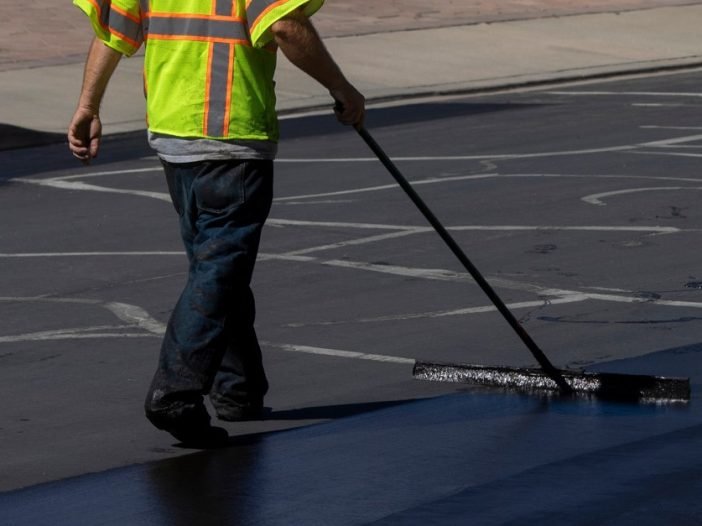
We apply sealer by spray or squeegee depending on the surface texture and project size. Spray application is faster and more consistent on large flat surfaces; squeegee application pushes sealer into surface pores more aggressively on rougher or older asphalt. Commercial projects typically get two coats — one applied immediately after the first has tacked off — for better coverage and longevity. Application rate is controlled carefully: too heavy a coat and it won't cure properly; too light and you lose protection.
Step 4: Cure Time
Freshly sealed asphalt needs to stay closed to traffic for 24 hours minimum — longer in cooler weather or if a second coat was applied. We seal in Fresno's warmer months whenever possible because the heat accelerates curing significantly. Don't let anyone tell you sealed asphalt can be reopened to traffic in 4–6 hours — that's enough to drive on but not enough for the sealer to fully bond and harden.
What Seal Coating Protects Against
A quality seal coat applied to sound asphalt protects against all four primary causes of asphalt deterioration:
- UV oxidation: The sun's UV rays break down the asphalt binder that holds aggregate together. Seal coating provides a sacrificial layer that absorbs UV before it reaches the asphalt.
- Water infiltration: Water that works into cracks and pores degrades the base over time. A sealed surface sheds water rather than absorbing it.
- Fuel and oil spills: Petroleum-based spills soften and dissolve asphalt binder. Sealer provides a chemical barrier that slows this process.
- Surface abrasion: Traffic wears the aggregate off an exposed surface faster than it wears a sealed one. The aggregate in sealer also provides additional traction.
How Long Does Seal Coating Last?
Under normal conditions in Fresno's climate, a quality seal coat lasts 3–5 years before retreatment is needed. Factors that shorten that window: heavy traffic, lots of turning and braking movements (these scuff the surface faster), poor initial application, and inadequate crack prep beforehand. The right maintenance cycle for most Central Valley properties is seal coating every 3–4 years paired with annual crack inspection. Our professional seal coating services in Fresno include a surface assessment at every estimate — we'll tell you whether your pavement is ready for a seal coat or needs repair work first. We serve Fresno and communities across the Central Valley.
Frequently Asked Questions About How Seal Coating Works
Can seal coating fix potholes or structural cracks?
No. Seal coating is a surface treatment — it cannot repair structural damage or fill potholes. Potholes need to be patched and structural cracks need to be filled before sealing. Applying sealer over active damage just cosmetically covers the problem while it continues to worsen underneath.
Why does new asphalt need to cure before seal coating?
Fresh asphalt contains oils that need to evaporate before sealer can bond properly. Sealing too early traps those oils under the sealer, which prevents the sealer from curing correctly and can cause it to peel or track. We recommend waiting 6–12 months after new asphalt installation before applying the first seal coat.
Is seal coating the same as crack filling?
No — they're different products serving different purposes. Crack filler is a rubberized compound that fills and seals open cracks. Sealer is a liquid coating applied over the whole surface. Proper seal coat work includes crack filling as prep, but they're done in sequence, not interchangeably.
Does seal coating make asphalt slippery?
A quality sealer with proper sand aggregate provides good traction — often better than worn, smooth asphalt. The issue arises with over-application of sealer without aggregate, or applying sealer to a surface that's still soft. Properly applied seal coat with the right aggregate content improves wet-weather grip.
How do I know when my pavement needs to be re-sealed?
When asphalt starts showing a grayish, faded appearance rather than rich black, the sealer is wearing off and the binder is beginning to oxidize. Small surface cracks appearing in a network pattern are another indicator. Don't wait until you have significant cracking — the goal is to reseal before oxidation gets a foothold. Call 559-765-7172 and we'll take a look.