

What Does Sealcoating Actually Do to Asphalt?
Sealcoating applies a thin protective layer over existing asphalt to block UV rays, water infiltration, and petroleum spills from penetrating the surface. It doesn't add structural strength or fix cracks — it preserves what's already there. A properly maintained asphalt surface that's sealed regularly can last 25–30 years. One that's never sealed may need replacement in 10–15 years.
How Often Should You Sealcoat Asphalt in Fresno?
In Fresno's climate, plan to sealcoat every 2–4 years. The Central Valley's intense UV load and summer heat accelerate asphalt oxidation faster than in milder climates. New asphalt should cure for 90 days before its first seal coat. After that, the frequency depends on traffic volume and sun exposure — a heavily used commercial parking lot may need sealing every 2 years, while a shaded residential driveway can go 4–5 years between coats.
Why Fresno Asphalt Needs Seal Coating More Than Most
Ask any long-time Fresno property owner and they'll tell you — pavement that isn't maintained doesn't last here. The San Joaquin Valley is hard on everything exposed to the elements. Summers push 105°F for weeks at a time. The sun beats down with a UV intensity that fades paint, bleaches wood, and oxidizes asphalt into a brittle gray surface that cracks and crumbles.
What sealcoating does is put a sacrificial layer between your asphalt and all of that. The sealer absorbs the UV radiation, keeps water out of the surface, and gives the pavement flexibility so it can expand and contract with temperature swings without cracking. It's not glamorous work, but it's the kind of maintenance that saves property owners thousands of dollars in early repaving.
What Happens to Unsealed Asphalt in the Central Valley
Without sealing, here's what happens: UV rays break down the asphalt binder — the sticky component that holds the aggregate together. The surface turns gray and starts to ravel (crumble at the edges). Water gets into hairline cracks, freezes on cold nights, and forces the cracks wider. Oil drips from vehicles soften and dissolve the binder in localized spots. Within 5–7 years of neglect, you're looking at significant cracking. Within 10–12 years, you may be looking at full replacement.
Regular seal coating in Fresno interrupts that cycle. It's the cheapest maintenance you can do relative to the damage it prevents.
The Professional Sealcoating Process
A quality seal coat job isn't just rolling on some black stuff. The surface prep matters as much as the material. We start by cleaning the surface — blowing out debris, sweeping, and addressing any oil spots with a degreaser primer. Unprimed oil spots cause the sealer to bubble and fail in those areas.
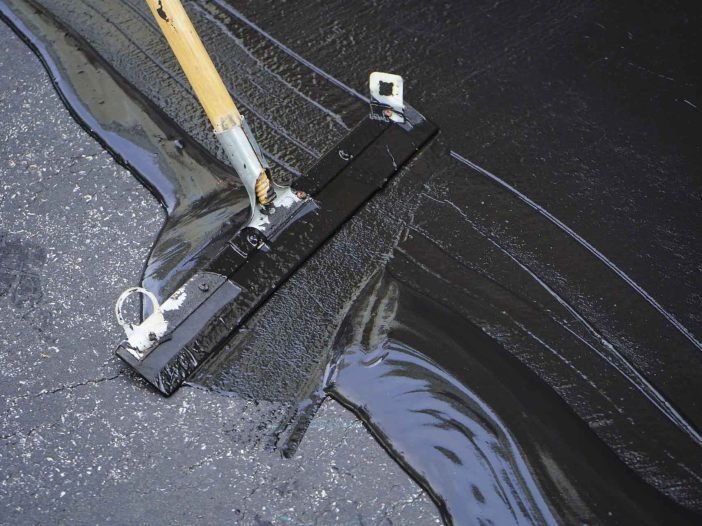
Then we fill cracks. Any crack wider than about an eighth of an inch gets filled with a hot-applied crack filler before sealing. Sealing over open cracks just waterproofs the top without addressing the underlying problem. After prep, we apply the sealer in two coats — squeegee or spray depending on the surface — and let it cure 24–48 hours before opening to traffic. Our full asphalt services team handles both crack filling and seal coating as a bundled maintenance service.
Seal Coating vs. Chip Sealing: Which Do You Need?
Both are surface treatments, but they're different products for different situations. Seal coating is a thin liquid coating — it protects and restores the appearance of asphalt in good condition. Chip sealing embeds aggregate into a liquid binder to create a new textured surface layer — it adds more protection, more thickness, and more traction. If your pavement is in decent shape and just needs protection and a fresh look, seal coat it. If it's more worn and you need actual surface restoration without a full overlay, chip sealing is worth considering. Our paving team will give you an honest read on what your specific surface needs.
We serve property owners across Fresno, Clovis, Visalia, and the Central Valley. Request a free seal coating estimate and we'll assess your surface and give you a straight answer.
Frequently Asked Questions About Sealcoating Asphalt
Can sealcoating fix cracks or potholes?
No — sealcoating is a surface treatment that protects intact asphalt. It does not repair structural damage. Cracks should be filled before sealing, and potholes need to be patched before any surface treatment is applied. Trying to seal coat over existing damage just cosmetically covers the problem until the damage forces its way back through. A reputable contractor will identify what needs repair versus what can be sealed as-is, and quote them separately.
How long does sealcoating last in Fresno?
In Fresno's climate, a quality seal coat typically lasts 2–4 years before it needs to be reapplied. Factors that shorten the lifespan include heavy vehicle traffic, lack of shade, and exposure to petroleum products (oil drips from parked vehicles). Residential driveways with moderate use in partially shaded locations can go longer — up to 4–5 years. High-traffic commercial parking lots in full sun may need recoating every 2 years to maintain proper protection.
What's the best time of year to sealcoat asphalt in Fresno?
Spring and fall are ideal — temperatures between 50°F and 90°F with low humidity give sealcoating the best cure conditions. That said, we sealcoat in Fresno's summers regularly by scheduling work in the early morning hours before peak heat. The key requirement is that the surface temperature be above 50°F and that there's no rain in the forecast for at least 24–48 hours after application. In the Central Valley, that's rarely a problem.
Is sealcoating worth it for an older driveway?
Depends on the condition. If the base is still structurally sound and the surface cracking is minor (hairline to quarter-inch cracks), sealcoating after crack repair is absolutely worth it — it extends the life of that pavement significantly at a fraction of replacement cost. If the driveway has extensive alligator cracking (the interconnected pattern that looks like, well, an alligator), failing sub-base, or numerous potholes, sealcoating is putting makeup on a structural problem. Get a professional assessment first.